
Buying a Property in Spain in 2026: How to Time Your Removals Around Completion, Keys and Storage

Buying a property in Spain is an exciting adventure, but the period between having your offer accepted and actually moving in can feel surprisingly overwhelming. Completion, key handover, renovations, customs and furniture delivery do not always happen in the neat order you might expect.
This is particularly important if you are relocating to the Costa del Sol from the UK. In September 2026, Idealista reported that British buyers represented 21% of Taylor Wimpey España’s Costa del Sol reservations, the largest share among 29 nationalities.
Many of those buyers will face the same practical question: where should your furniture go if you own the property, but cannot yet receive a shipment?
Understand why completion and moving in are different dates
The Spanish property-buying process usually follows a familiar sequence:
Make an offer and pay a reservation deposit.
Complete legal checks with your Spanish lawyer.
Apply for or obtain your NIE, the foreigner identification number required for the purchase.
Sign the private purchase contract, often the contrato de arras, and pay the agreed deposit.
Attend the notary appointment, where you sign the escritura de compraventa, pay the balance and complete the purchase.
Receive the keys or arrange practical handover with the seller or developer.
For a resale property, keys are commonly handed over at the notary on completion day. However, that does not necessarily mean the home is ready for a lorry, container or groupage delivery.
You may still need to arrange:
Renovation or decorating work
Electrical, plumbing or air-conditioning repairs
Installation of kitchens, wardrobes or appliances
Utility connections and meter changes
A snagging inspection
Community or estate access arrangements
Parking permissions for a removals vehicle
With a new-build property, the gap can be more complicated. The developer may be waiting for the Licencia de Primera Ocupación or equivalent occupancy documentation before practical handover. Even where legal completion and key transfer take place together, access cards, remotes, final inspections, snagging works and utility arrangements may follow separately.
Ask your lawyer, estate agent or developer to confirm three dates in writing:
The date of legal completion
The date you will receive keys and full access
The earliest date the property can safely receive furniture
That third date is the one your removals company needs.
Plan your accommodation for the in-between period
If your furniture arrives before the property is ready, you will need a temporary solution. Depending on the length of the gap, your options may include:
Stay in a short-term rental near your new home
Use a hotel or aparthotel for a few days or weeks
Stay with family or friends
Keep your UK property available for longer
Place your shipment into secure storage until the property is ready
Do not underestimate the difference between visiting your new home and living there. A property may have beautiful views and a finished kitchen, but still be unsuitable for a full delivery if builders are working inside, lifts are not operational or the development has restricted access.
Temporary storage can give you flexibility without forcing your removal schedule to depend on an uncertain handover date.
Use Algeciras storage as a controlled buffer
Our secure warehouse in Algeciras is designed for exactly this type of transition. It can act as a practical buffer between your UK departure, Spanish customs clearance and final delivery to your new home.
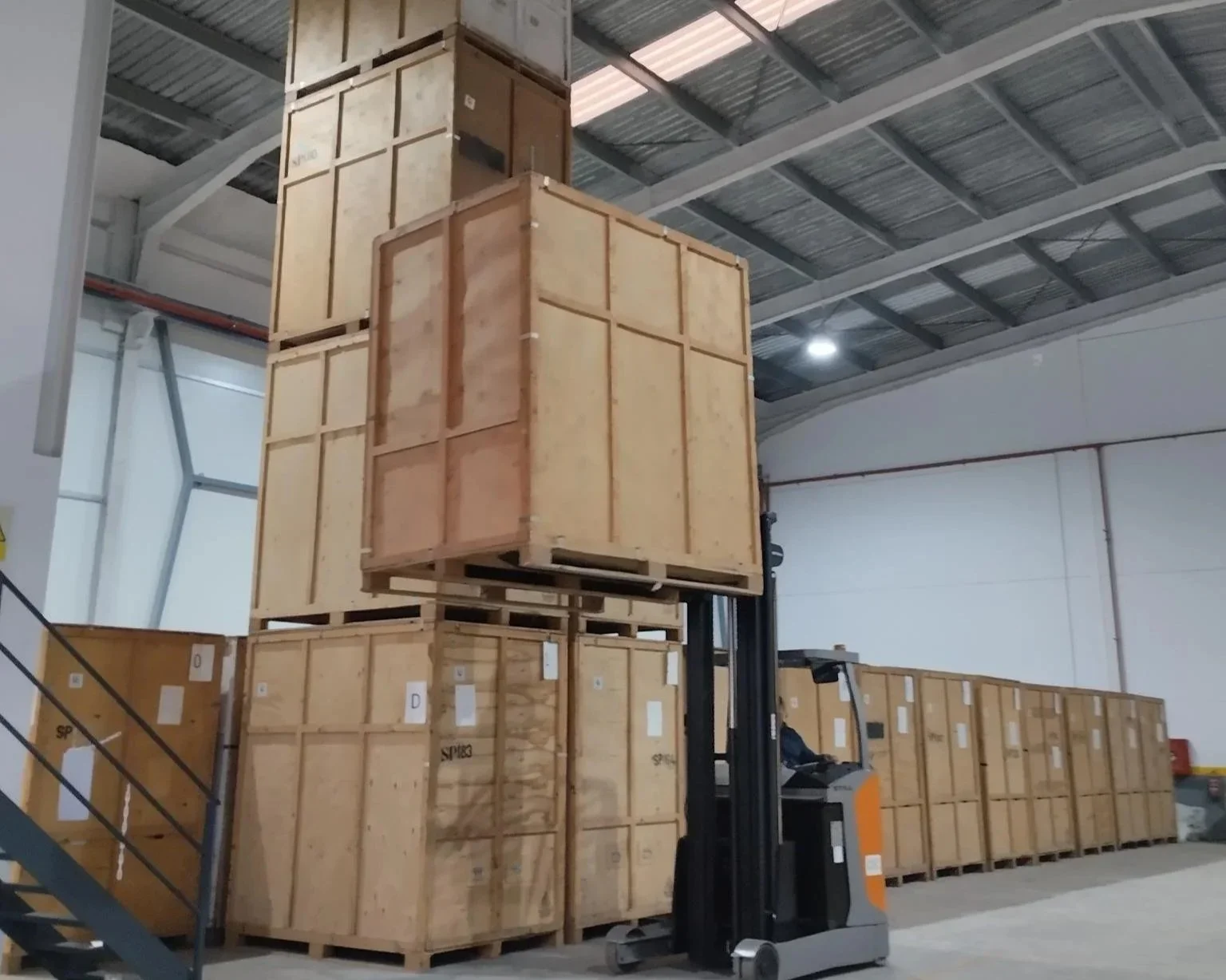
Your belongings can be stored for the short term while work is completed, or for longer if you are gradually furnishing a second home or managing a more extended relocation. The facility provides:
Secure, purpose-built warehouse storage
Climate-controlled conditions to help protect furniture and personal effects
Palletised handling and forklift access
Short-term and long-term arrangements
Inventory-based management of your shipment
Flexible delivery once your property is genuinely ready
This can be more straightforward than sending furniture to a property where it may need to be moved several times around builders, decorators or snagging teams.
You can learn more about our secure storage units in Algeciras or read our advice on keeping furniture safe in storage.
Time your UK shipment around the property, not just the purchase
International removals require forward planning, particularly after Brexit. A full container or groupage shipment from the UK may be booked several weeks in advance, and the exact arrival date can be affected by collection capacity, sailing schedules, customs clearance and delivery access.
Start by giving your removals company two dates:
Your expected completion date
Your realistic move-in or delivery date
If those dates are close together and reliable, a direct door-to-door delivery may be suitable. If they are uncertain, ask about routing the shipment into storage first.
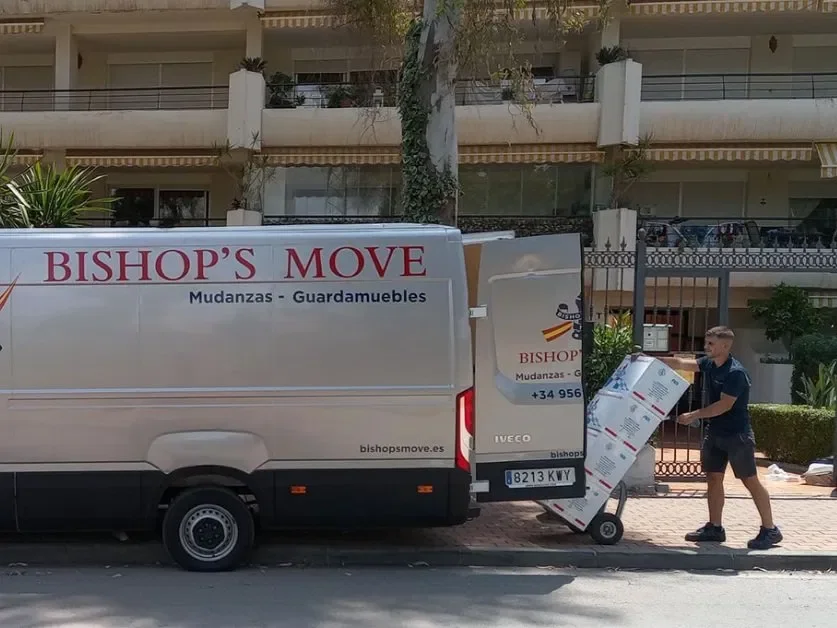
A shipment that arrives too early can create extra costs. Depending on the route and transport arrangement, you may face:
Port or terminal storage charges
Container demurrage or detention
Additional handling and reloading
Waiting time for a delivery vehicle
A second delivery appointment
Local warehouse charges
Extra transport if the original property cannot accept the load
These costs vary according to the carrier, port, shipment type and length of delay. Your moving company should explain what is included in the quotation and what may be charged if the destination is unavailable.
The safest approach is to build flexibility into the plan from the beginning. A shipment can be collected from your UK home, cleared through the necessary procedures and stored securely until your Spanish property is ready.
Our UK to Spain relocation guide covers the wider process, including customs and documentation.
Coordinate with the people already involved in the property
Your removals company should not be working in isolation. Ask your estate agent, lawyer, developer, builder or property manager to provide practical information before delivery is booked.
Confirm:
Whether the road can accommodate the removals vehicle
If a smaller shuttle vehicle is required
Whether a parking permit is needed from the Ayuntamiento
Which entrance, lift or loading bay should be used
Whether the building has delivery-hour restrictions
Who will meet the delivery team
Whether builders or cleaners will still be working
Whether the property has working electricity and water
Whether the developer has released all keys, remotes and access cards
This is especially important in gated communities and premium areas such as Marbella, Sierra Blanca, La Zagaleta, the Golden Mile and Sotogrande. Local knowledge can make the difference between a smooth delivery and a vehicle waiting outside a security gate.
For more lifestyle and area guidance, explore our Marbella 101 guide.
Align customs paperwork with completion and residency
If you are moving your normal residence from the UK to Spain, you may be eligible to apply for Transfer of Residence relief on qualifying household goods. This can allow eligible used personal belongings to enter Spain without import duty and VAT, provided the relevant conditions are met.
The rules are specific. In general, you may need to demonstrate that:
You have lived outside the EU for the required period
The goods have been owned and used for at least six months
The goods are for personal use rather than resale
You are genuinely transferring your normal residence
The import takes place within the applicable time window
The Spanish Tax Agency guidance on transfer of residence relief should be reviewed with your customs agent or removal company.
Buying a holiday home does not automatically establish Spanish residency, and purchasing a property is not by itself enough to qualify for relief. The key dates relate to your transfer of normal residence and the import declaration.
Use the completion and escritura date as the main planning anchor, rather than waiting until the keys are physically available or the furniture is ready to arrive. Your customs adviser can then confirm the evidence and timing required for your individual circumstances.
If you are also planning extended stays, remember that owning property does not remove the post-Brexit 90-day rule. Our guide to the 90-Day Rule for UK nationals in Spain explains the basics.
Follow this simple completion-to-move-in checklist
Before making an offer
Research the location and property type.
Speak to a Spanish lawyer.
Begin the NIE process if you do not already have one.
Consider whether you are buying a permanent home or second residence.
Discuss likely shipment volumes with a removals company.
After your offer is accepted
Confirm the expected completion date.
Ask whether the property needs works or licences.
Check the developer’s anticipated handover process if it is a new build.
Start customs and Transfer of Residence discussions.
Request a removals survey and provisional quotation.
Before the notary appointment
Confirm that your NIE, funds and legal checks are in place.
Agree the notary date with your lawyer.
Ask for written confirmation of key and access arrangements.
Decide whether your shipment should go direct or into storage.
Reserve temporary accommodation if necessary.
After completion
Confirm that the property is clean, accessible and safe for delivery.
Check lifts, parking, utilities and building restrictions.
Release the shipment from storage only when the property is ready.
Arrange furniture installation, unpacking and removal of packing materials.
Make the gap part of your plan
The period between buying a property in Spain and moving in does not have to become a source of stress. With the right sequence, your belongings can travel safely from the UK, clear the necessary customs process and wait securely while your new home catches up.
Bishop’s Move Spain provides a door-to-door service covering professional packing, international shipping, customs coordination, storage and final delivery. Our bilingual teams understand the practical realities of relocating to the Costa del Sol and can help you build a plan around completion, handover and readiness.
Your new life in Spain should begin with anticipation, not uncertainty. Plan the gap, use storage when you need it and give yourself the flexibility to move in when your property is truly ready.